The road down
The journey is part of the day.
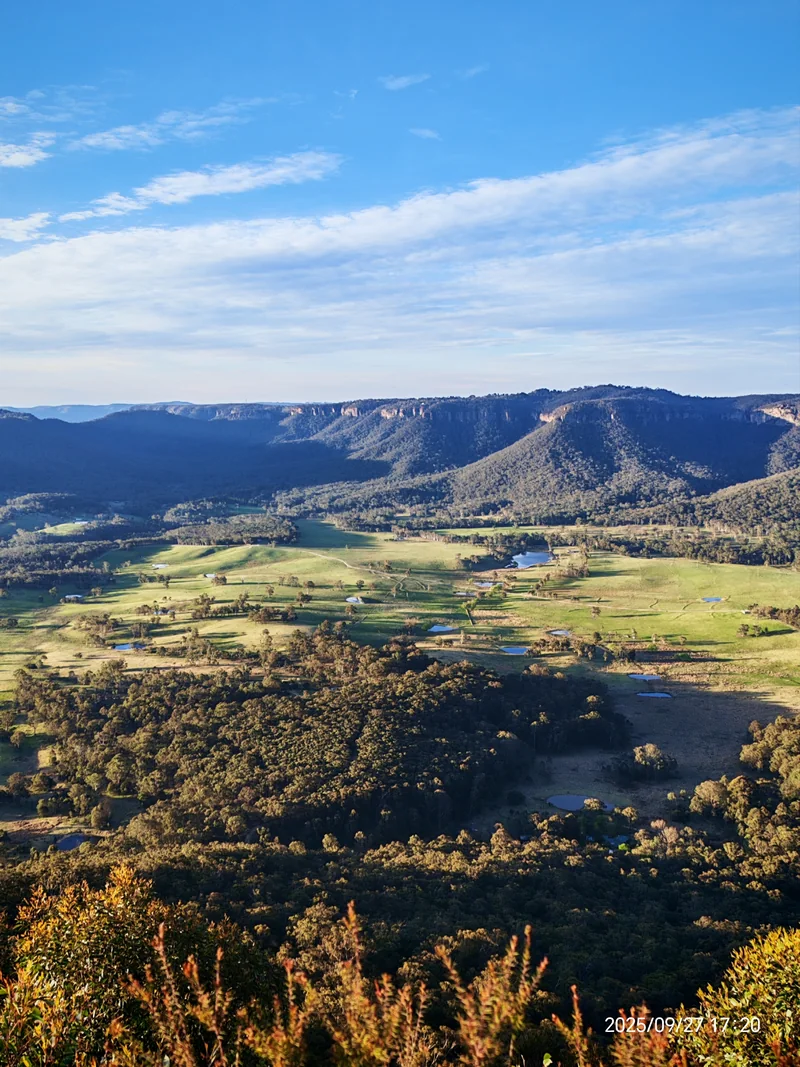
Eagle's Nest sits high on Shipley Plateau, with Megalong Valley to the south and the broad Kanimbla landscape to the north. The descent from Blackheath is not simply the road to somewhere else; it is the first part of the experience.
The plateau forest draws closer, tree ferns gather beside the winding road and the shaded gullies feel cooler and greener. Then the trees release their hold and the valley opens below the sandstone escarpment. It is a transition worth noticing slowly.
Country and history
A landscape with a much longer story.
The Blue Mountains are within the Country of the Dharug and Gundungurra peoples, whose connection to Country is continuous and deep. We acknowledge that this living history comes before the later industries and settlements described here.
European industry changed parts of the valley in the nineteenth century. Blue Mountains local-history records document kerosene-shale discoveries and the Glen Shale Mine; the broader mining system once reached from Katoomba into the Megalong and Jamison valleys. Those operations receded, leaving a quieter rural landscape of farms, horses, cattle and bushland.
The Six Foot Track
An 1884 route still crosses the valley.
NSW National Parks describes the Six Foot Track as following an 1884 heritage horse track from near Katoomba into Megalong Valley and beyond. The complete route is a challenging multi-day walk, but shorter sections can also be undertaken.
This is not a walk to approach from an old article alone. Weather, remote conditions and closures matter, and the Jenolan end of the route is affected by current access restrictions. Read the official track page and live alerts before deciding where to walk.
Forest and wildlife
Stop before the valley opens.
One of the pleasures of the descent is the cool, dense vegetation that feels different from the drier plateau above. After rain, moss, ferns and shaded gullies make the road feel especially atmospheric. Use established, safe places to stop and leave the road clear.
In the open valley, slow down for animals and for rural traffic. Kangaroos and other wildlife may be active around quieter parts of the day; observe from a respectful distance and take particular care around dawn and dusk.
Coffee and the farm
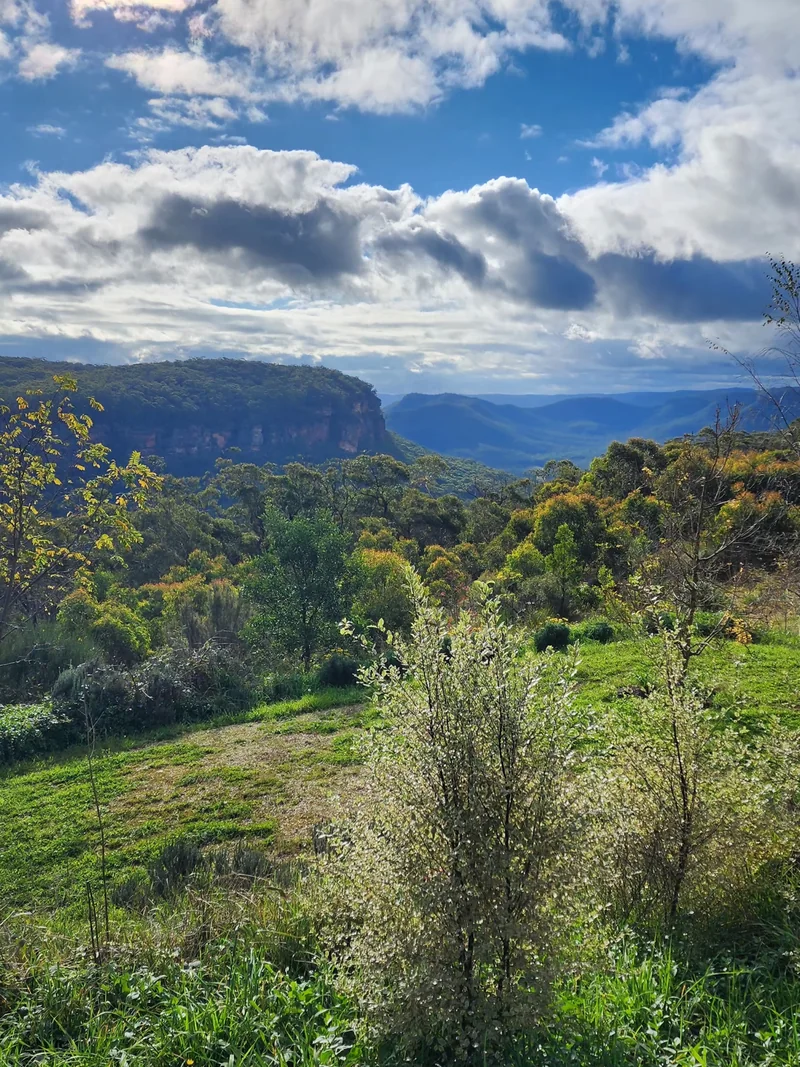
Pause beneath the cliffs.
The historic Megalong Valley Tearooms are a relaxed country stop and a farm-gate outlet for LOT 101. Their first-party information highlights farm produce alongside long-standing favourites such as scones and apple pie. Check the current operator page before travelling rather than relying on hours copied into a guide.
LOT 101 describes a 600-hectare mix of native bushland and farmland, with seasonal growing, livestock and regenerative farming practices focused on soil, biodiversity, water and habitat. That working-landscape context makes the valley more than a scenic backdrop.
Make an occasion of it
A long lunch or time with horses.
Megalong Restaurant sits within LOT 101. The menu follows what is ready in the kitchen garden, orchard and farm, so it is better treated as a planned part of the day than a guaranteed drop-in. Use the restaurant's current reservation page for availability.
Horse riding remains part of Megalong Valley's character. Amaroo Equine currently advertises lessons and private trail experiences by appointment, with experience requirements for some rides. Contact the operator directly to confirm suitability and current availability.
Restaurant reservations and current information Current riding information
Why we recommend it
It is not one lookout. It is the transition.
Megalong Valley stays with us because it unfolds: mountain plateau to green gullies, then country beneath the cliffs. Sometimes the most memorable part of the Blue Mountains is not the place where you stop for the photograph, but the road into somewhere you did not expect to find.